The sculpture garden will become a place of action: On June 21, 2026, from 2 p.m., we invite the public to take action against invasive plants together and at the same time experience on their own bodies how heat changes our habitat.
Humans under heat stress (Michael Windisch, ETH D-USYS)
Heat stress is a biological boundary that unites us with the plant world. Michael Windisch has analyzed the temperatures in the museum garden in detail. On the heat stress course, we compare our personal feelings at work with this hard data. Whether a plant withers under the sun or a person reaches the limits of their endurance while gardening - the physiological mechanisms are comparable. The measurements on site drastically show that the difference between asphalt and cool shade can be over 7 °C WBGT. This jump determines vitality or exhaustion.
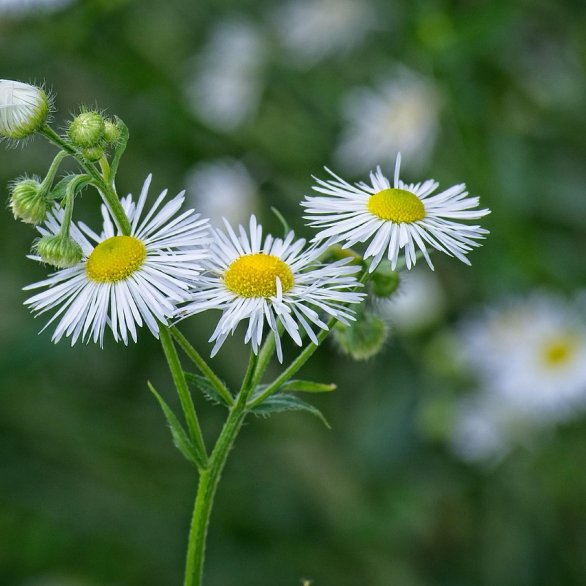
Actively tackling the annual weed (Theo Obrist, Sulz Laufenburg Nature Conservation Association)
Under the expert guidance of Theo Obrist (Sulz/Laufenburg Nature Conservation Association), the volunteers tackle the invasive annual weed. It's not just about removing it, but also about recognizing it: Which plants are migrating and which are displacing our native flora?
A thank you for the helpers
After working under the sun and in the shade, the museum invites all helpers to enjoy coffee and cake. There is an opportunity to discuss the experiences and nature topics in a relaxed atmosphere.
Humans under heat stress (Michael Windisch, ETH D-USYS)
Heat stress is a biological boundary that unites us with the plant world. Michael Windisch has analyzed the temperatures in the museum garden in detail. On the heat stress course, we compare our personal feelings at work with this hard data. Whether a plant withers under the sun or a person reaches the limits of their endurance while gardening - the physiological mechanisms are comparable. The measurements on site drastically show that the difference between asphalt and cool shade can be over 7 °C WBGT. This jump determines vitality or exhaustion.
Actively tackling the annual weed (Theo Obrist, Sulz Laufenburg Nature Conservation Association)
Under the expert guidance of Theo Obrist (Sulz/Laufenburg Nature Conservation Association), the volunteers tackle the invasive annual weed. It's not just about removing it, but also about recognizing it: Which plants are migrating and which are displacing our native flora?
A thank you for the helpers
After working under the sun and in the shade, the museum invites all helpers to enjoy coffee and cake. There is an opportunity to discuss the experiences and nature topics in a relaxed atmosphere.
This text was translated by an AI.