From May, the Rehmann Museum invites you to a special artistic exploration. Under the title "Alchemy between Earth & Fire", artist Frauke Roloff will lead a five-part ceramics workshop that takes participants back to the origins of human history. Under guidance, you will create your own objects from clay using archaic techniques and experience first-hand how natural fire changes them.
Frauke Roloff uses a process that was already used for firing ceramics in the Neolithic and Bronze Age. In five successive stages - shaping, polishing, coloring, firing and waxing - participants experience the immediate transformation of raw earth into art.
"It's an open trial and error course," explains Roloff. "I'm interested in encountering the material and the elements. We work as archaically as possible." Various types of earth are used, including highly fireclayed clay and brick clay from the Laufen/Birstal region. Found objects from her own walks can also be incorporated into the design process.
From shaping to firing
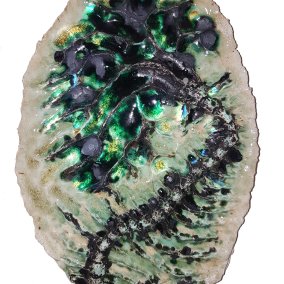
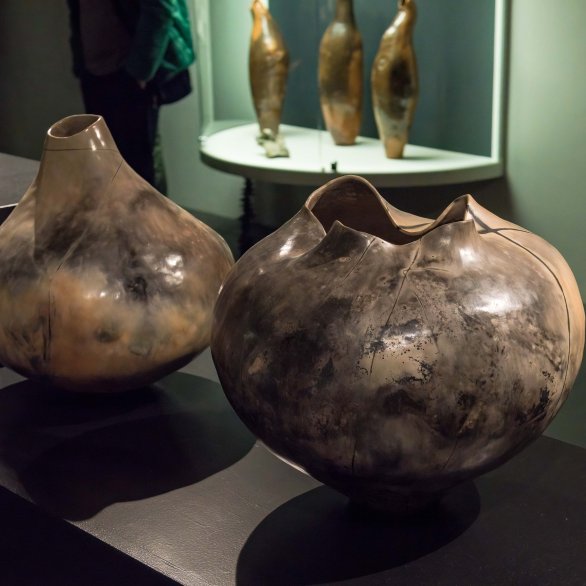
Particular attention is paid to the firing process. Instead of being fired in an electric kiln, the objects are fired in a simple low firing at temperatures between 700 and 900 degrees in the open air. The smoke and flames leave individual marks on the surfaces, making each object unique and unmistakable. The final retrieval of the workpieces from the cold ashes marks the climax of this alchemical transformation.
Frauke Roloff uses a process that was already used for firing ceramics in the Neolithic and Bronze Age. In five successive stages - shaping, polishing, coloring, firing and waxing - participants experience the immediate transformation of raw earth into art.
"It's an open trial and error course," explains Roloff. "I'm interested in encountering the material and the elements. We work as archaically as possible." Various types of earth are used, including highly fireclayed clay and brick clay from the Laufen/Birstal region. Found objects from her own walks can also be incorporated into the design process.
From shaping to firing
Particular attention is paid to the firing process. Instead of being fired in an electric kiln, the objects are fired in a simple low firing at temperatures between 700 and 900 degrees in the open air. The smoke and flames leave individual marks on the surfaces, making each object unique and unmistakable. The final retrieval of the workpieces from the cold ashes marks the climax of this alchemical transformation.
This text was translated by an AI.