Grave finds are among the most important sources in archaeology. But what can they tell us about life in times long past? Anna-Marie Dürr M.A. (Archäologisches Landesmuseum Baden-Württemberg) will address this question in a lecture based on selected finds from the Merovingian period (mid 5th - end 7th century).
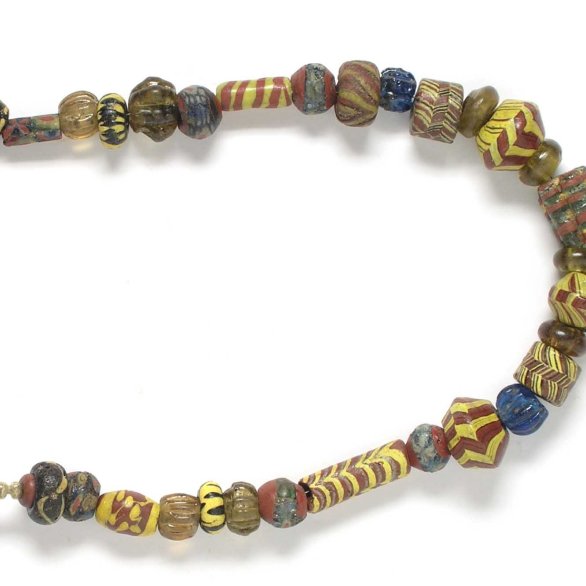
The spectrum ranges from simple iron belt buckles and colorful glass beads to spathes, multi-part inlaid belt sets or vessels made of clay, glass and non-ferrous metal. While most of these are everyday objects, others express the status or social role of the buried person or even provide an insight into the (super)beliefs of the time. There is also a special focus on the frequently observed ancient robbing of graves. Was this a case of "opportunity thieves" in the truest sense of the word or is the background far more complex?
Participation is free of charge, registration is not necessary. Access to the Central Archives (Lützowerstr. 10) via Militärstr./Leopoldplatz.
The spectrum ranges from simple iron belt buckles and colorful glass beads to spathes, multi-part inlaid belt sets or vessels made of clay, glass and non-ferrous metal. While most of these are everyday objects, others express the status or social role of the buried person or even provide an insight into the (super)beliefs of the time. There is also a special focus on the frequently observed ancient robbing of graves. Was this a case of "opportunity thieves" in the truest sense of the word or is the background far more complex?
Participation is free of charge, registration is not necessary. Access to the Central Archives (Lützowerstr. 10) via Militärstr./Leopoldplatz.
This text was translated by an AI.