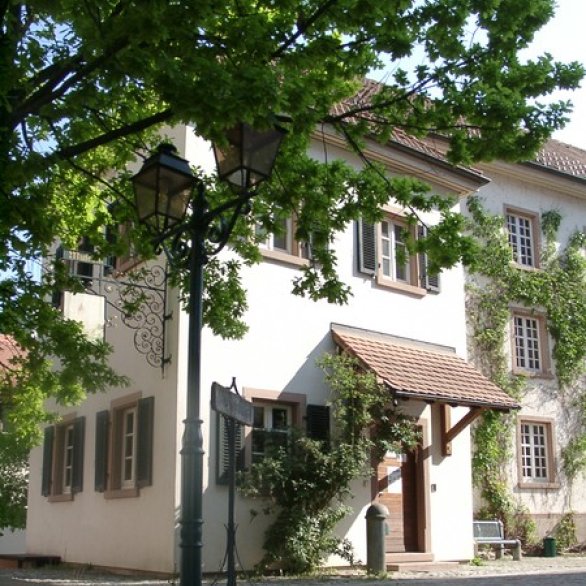
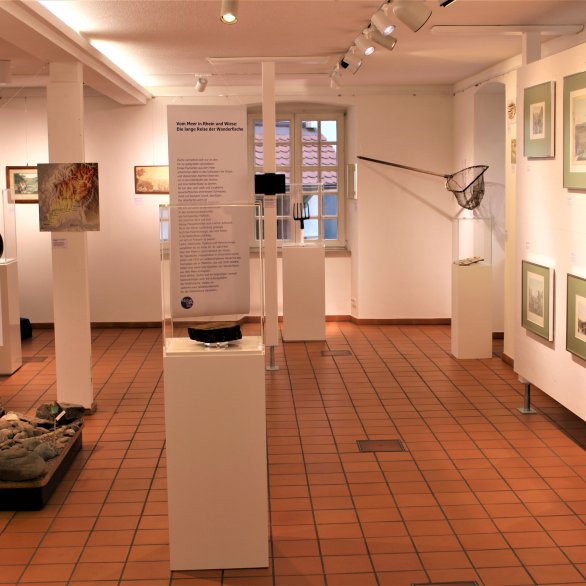
The oldest museum of the Markgräfler region can be found inside the former grain storehouse right behind the medieval church St. Michael. It hosts valuable collections of aristocratic and bourgeois domestic culture. The exhibits stem from the baronial family of Roggenbach (they lived in Schopfheim from 1500-1925) and the “high society” of the 18th and 19th centuries.
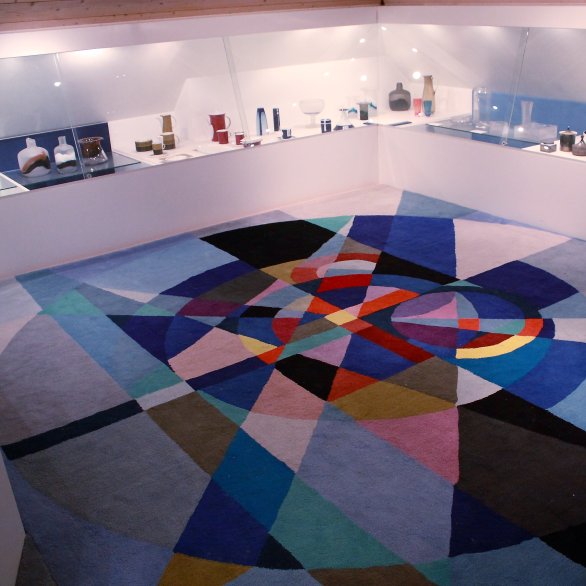
Further highlights are: late medieval grave stones, the “Design-Collection” by Professor H.Th.Baumann, the collection of paintings by Fritz Heeg-Erasmus, items of the Roggenbach-Gayling-Foundation, a selection of domestic culture from early medieval times until 1960, impressions of Schopfheim from around 1300, Baden handcraft classes and products, former influence of agriculture in the city centre of Schopfheim, cuisine and food conservation between 1900 and 1950, the Margrave Ludwig Wilhelm of Baden-Baden known as “Türkenlouis” and his baroque fortifications as well as the automated musical instrument “Kolliope”.
Further highlights are: late medieval grave stones, the “Design-Collection” by Professor H.Th.Baumann, the collection of paintings by Fritz Heeg-Erasmus, items of the Roggenbach-Gayling-Foundation, a selection of domestic culture from early medieval times until 1960, impressions of Schopfheim from around 1300, Baden handcraft classes and products, former influence of agriculture in the city centre of Schopfheim, cuisine and food conservation between 1900 and 1950, the Margrave Ludwig Wilhelm of Baden-Baden known as “Türkenlouis” and his baroque fortifications as well as the automated musical instrument “Kolliope”.