To mark the 100th anniversary of the Neuchâtel carnival guild "D'Rhiischnooge", the museum is dedicating a special exhibition to Neuchâtel’s oldest guild and the city’s long carnival tradition.
Carnival has been documented in Neuchâtel am Rhein as far back as the 15th and 16th centuries. Its development in the 20th century can be traced through numerous historical photographs, documents, and artifacts: from the first Rose Mondays starting in 1912 and parades in the 1920s to the founding of a council of eleven in 1927 to organize the carnival. This marked the birth of the first carnival guild, which was renamed the "D'Rhiischnooge" carnival guild in 1938.
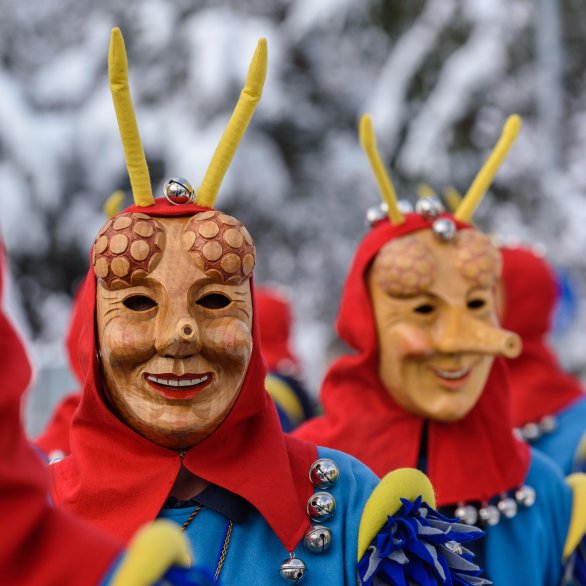
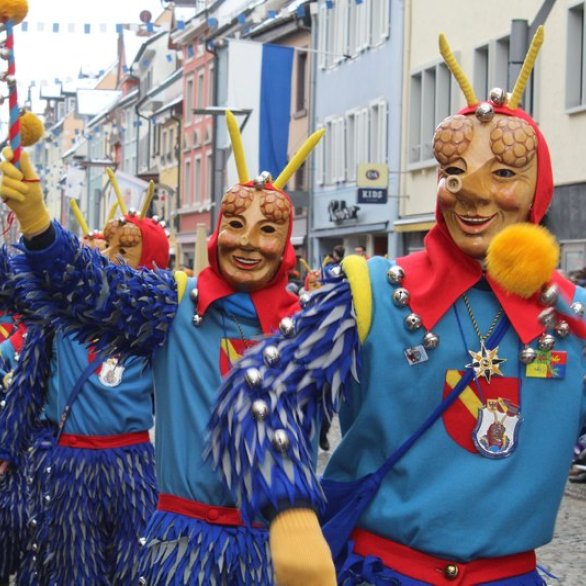
The distinctive "Rhiischnoog" carnival figure - with its long snout, yellow antennae, insect eyes, and blue-gray spotted costume- made its debut in the Neuchâtel carnival in 1964.
From "Schmutzige Dunnschdig" (Fat Thursday) through Ash Wednesday, the entire city is swept up in the spirit of the “fifth season.” The exhibition showcases the history, distinctive characters, and key figures, as well as the diverse customs of the Neuchâtel Carnival.
Carnival has been documented in Neuchâtel am Rhein as far back as the 15th and 16th centuries. Its development in the 20th century can be traced through numerous historical photographs, documents, and artifacts: from the first Rose Mondays starting in 1912 and parades in the 1920s to the founding of a council of eleven in 1927 to organize the carnival. This marked the birth of the first carnival guild, which was renamed the "D'Rhiischnooge" carnival guild in 1938.
The distinctive "Rhiischnoog" carnival figure - with its long snout, yellow antennae, insect eyes, and blue-gray spotted costume- made its debut in the Neuchâtel carnival in 1964.
From "Schmutzige Dunnschdig" (Fat Thursday) through Ash Wednesday, the entire city is swept up in the spirit of the “fifth season.” The exhibition showcases the history, distinctive characters, and key figures, as well as the diverse customs of the Neuchâtel Carnival.