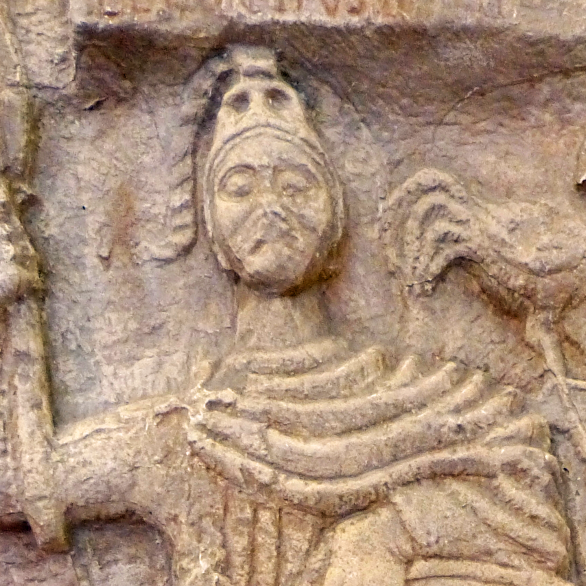
From the 3rd to the 5th century AD, the political and social situation along the Upper Rhine changed fundamentally. Parallel to the abandonment of the Limes and Rome's retreat to a new line of control along the Rhine and Danube, a steady Germanization of the border provinces took place in both the military and civilian spheres.
The literary and archaeological sources tell of Germanic tribes in the Roman army and new fortifications on the riverbanks, but also of the Alamanni as new settlers and the first Christians on the Upper Rhine.
In his lecture, Dr. Martin Kemkes (Archäologisches Landesmuseum Baden-Württemberg) will provide an overview of this exciting epoch on the threshold between Late Antiquity and the Early Middle Ages.
Participation is free of charge, registration is not necessary.
The literary and archaeological sources tell of Germanic tribes in the Roman army and new fortifications on the riverbanks, but also of the Alamanni as new settlers and the first Christians on the Upper Rhine.
In his lecture, Dr. Martin Kemkes (Archäologisches Landesmuseum Baden-Württemberg) will provide an overview of this exciting epoch on the threshold between Late Antiquity and the Early Middle Ages.
Participation is free of charge, registration is not necessary.
This text was translated by an AI.