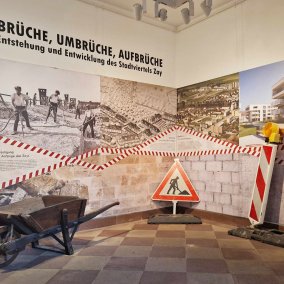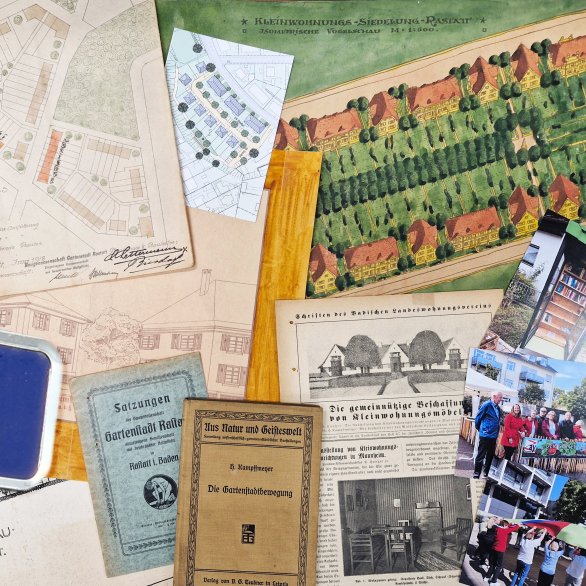
The exhibition traces this eventful history within the context of urban development. It shows how economic and social challenges following the dismantling of Rastatt’s fortifications around 1900, combined with ideas for social reform, gave rise to a unique residential neighborhood. Upper-class villas, small cooperative apartments, and spacious green spaces continue to shape its diverse urban landscape to this day. In connection with the Garden City Movement—which originated in England and found fertile ground early on in the Grand Duchy of Baden—the Zay is also placed within a broader regional urban planning context.
Today, Zay faces new challenges: demographic change, the preservation of established structures, and the demands of modern living. It becomes clear that many of the questions from that time remain relevant today and offer valuable insights into future social and environmental issues.
Historical exhibits, personal insights from residents, and participatory elements bring the exhibition to life. An interactive hands-on room invites visitors to explore the Zay in a playful way.