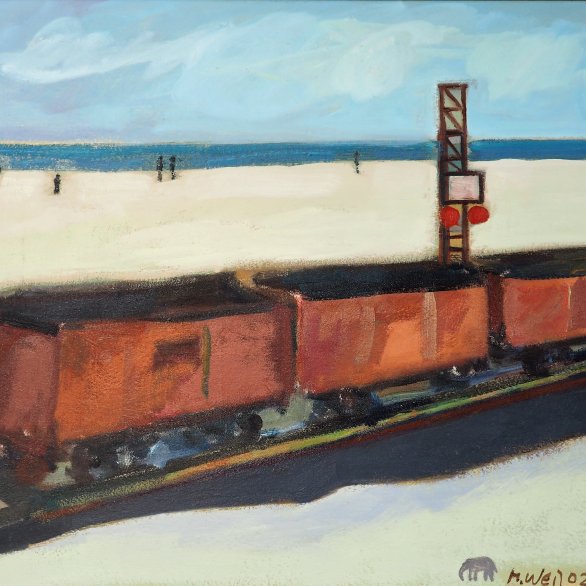
Manfred Weil (1920-2015) from Cologne came from a Jewish family from Breisach and Eichstetten. He survived the Holocaust by escaping from the Gurs concentration camp, among other things, and settled in Bonn after the war. After studying at the Kölner Werkschulen
he worked as a painter, graphic artist and teacher. His graphic and painterly work is characterized by
is characterized by an impressive variety: from political caricatures and biblical motifs to commercial art in the early years to portraits, still lifes and landscapes. Despite or perhaps because of his difficult experiences of persecution and flight, Manfred Weil was determined to reflect the beautiful aspects of life in his art: "You can't always crush yourself, I have a strong will to live!" he says at the end of the film in which he tells his story of survival during the Shoah.
A selection of his works can be seen in Lörrach, documenting both his artistic talent and his eventful life.
he worked as a painter, graphic artist and teacher. His graphic and painterly work is characterized by
is characterized by an impressive variety: from political caricatures and biblical motifs to commercial art in the early years to portraits, still lifes and landscapes. Despite or perhaps because of his difficult experiences of persecution and flight, Manfred Weil was determined to reflect the beautiful aspects of life in his art: "You can't always crush yourself, I have a strong will to live!" he says at the end of the film in which he tells his story of survival during the Shoah.
A selection of his works can be seen in Lörrach, documenting both his artistic talent and his eventful life.