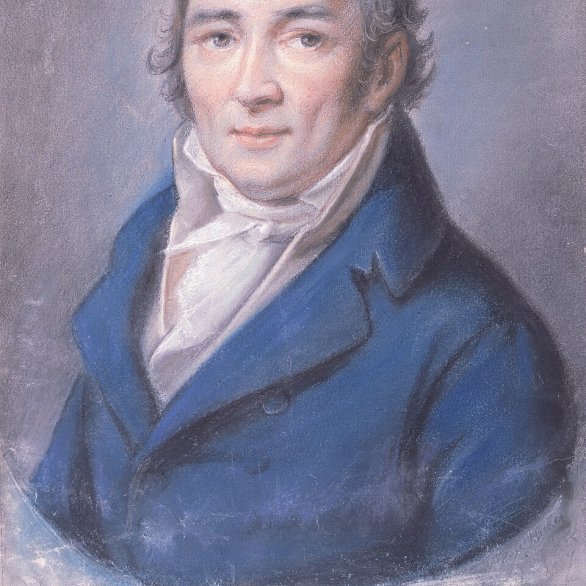
Uli Führe’s musical settings lend Johann Peter Hebel’s poems a new immediacy. Hebel was a man of sensuality. His poem about the reveler, as well as the ever-cheerful tobacco smoker, brim with a zest for life. He wrote against superstition and in favor of tolerance. He conveyed his observations of nature (“The Beetle,” “The Spider”) so vividly that even Goethe was deeply impressed by his poems. In between, Führe repeatedly reads illuminating excerpts from letters that offer a glimpse into everyday life from 1800 to 1826. The program is enriched by several historical musical settings of Hebel’s works from 1835 by the East Prussian composer Johann Benjamin Groß. Texts such as “Der Wegweiser” and “Der Mann im Mond” reveal the side of the admonishing preacher in his work. With comfort and contentment, he created two concise poems that, in their self-contained grandeur, bear witness to the highest form of poetry. And it is the rediscovery of the calendar stories, which until recently were still featured in many school textbooks. With their linguistic conciseness, these stories set the stylistic standard for many renowned authors. Hebel was an Enlightenment thinker, theologian, natural scientist, politician, and, indeed, a poet. Uli Führe, born in Lörrach in 1957, studied music and lives in Buchenbach as a musician, composer, and Alemannic songwriter. He has published numerous works, including *Muul uf*, *Dank Hebel*, *Himmel us Stei*, *D’Fledermuus*, *D’Staumacher*, and *Ikarus*; *Himmel us Stei* earned Führe the Annual Prize of the German Record Critics’ Association for his dialectCD *Ikarus*, based on texts by M.M. Jung; the Baden-Württemberg Cabaret Award; most recently, he received the Hebel Plaque from the municipality of Hausen and the Alemannenring in Lörrach.
This text was translated by an AI.