At Caesar's table - Roman cooking and enjoyment
On Sunday, January 18, 2026 from 3 to 5 pm, the Förderverein Museum Bad Krozingen e. V. is organizing a small cooking event on Roman cuisine with Dr. Christel Bücker and Dr. Michael Hoeper for big and small cooks (children from 10 years) in the town museum.
Much of what we associate with Italian-Roman cuisine today did not exist in Roman times in the 1st to 4th centuries AD. Tomatoes and potatoes were still slumbering undiscovered in America, pasta had not yet been invented. Cane sugar already existed, but honey was mostly used for sweetening. Numerous foods were cultivated by the Romans and introduced to us, such as sweet cherries, grapes, peaches, walnuts, asparagus and leeks. Pepper, thyme, caraway, ginger and cinnamon as well as dates and figs were imported from the Mediterranean and India.
Many recipes have been handed down by Roman authors such as Vergilius, Cato, Columella and Pliny. Particularly sophisticated recipes are described in the cookbook of Apicius, which today remind us of a mixture of Mediterranean and East Asian cuisine. Well-seasoned dishes prepared with olive oil, wine, vinegar, many herbs, spices and nuts were typical of Roman cuisine. The special features of Roman cuisine are presented during a short guided tour. We will then prepare simple Roman dishes and, of course, enjoy them too.
Sunday, January 18, 2026, 3 - 5 p.m. in the town museum, Basler Straße 10, Bad Krozingen
Participation fee € 10.00 / Registration (children aged 10 and over) required from now until 14.1.2026 at the Cultural Office: Tel. 07633/407-164 or kulturamt@bad-krozingen.de
Captions Photos:
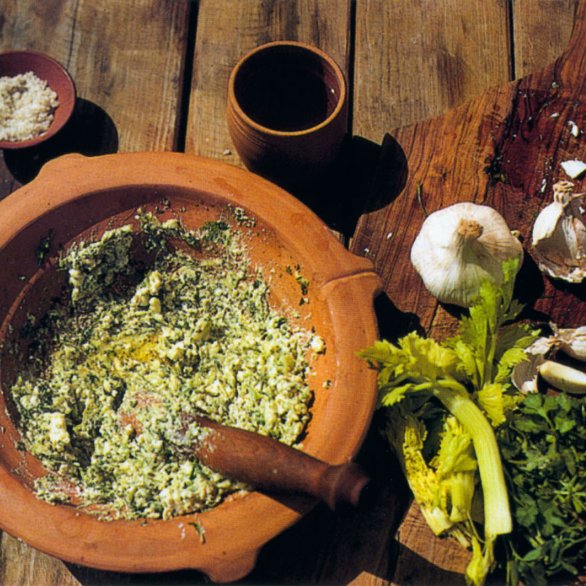
01 The Roman spread - called moretum - is a herbal curd made from sheep's cheese, garlic and many herbs (from: G. Gerlach, Zu Tisch bei den alten Römern. Archaeology in Germany 2001).
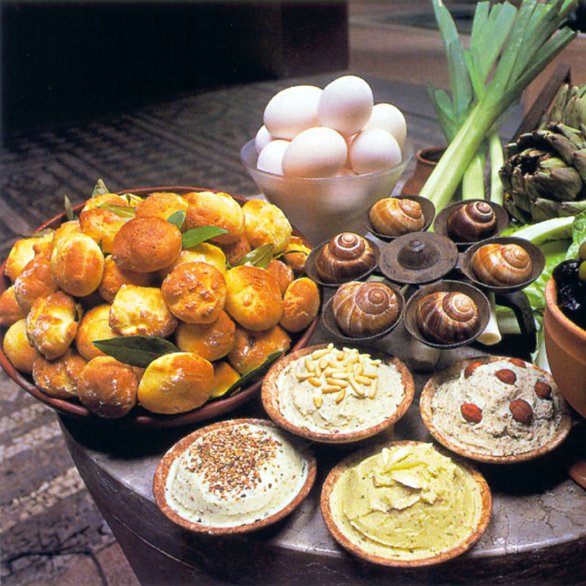
02 Delicacies from the Roman kitchen (from: G. Gerlach, Zu Tisch bei den alten Römern. Archaeology in Germany 2001).
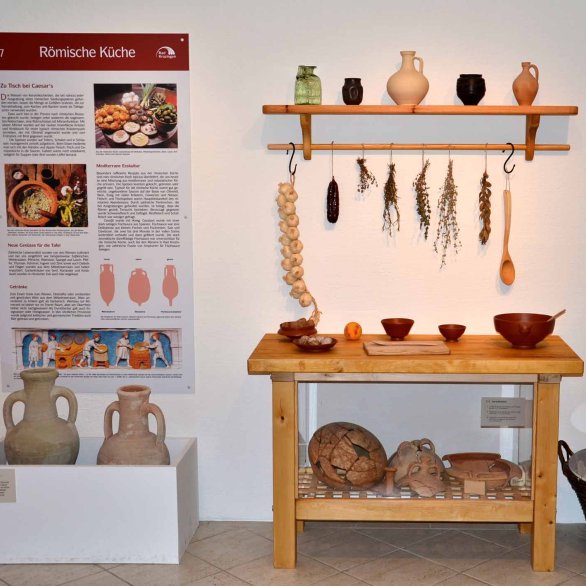
03 The staging of the Roman kitchen in the Bad Krozingen town museum (photo by Christel Bücker).
On Sunday, January 18, 2026 from 3 to 5 pm, the Förderverein Museum Bad Krozingen e. V. is organizing a small cooking event on Roman cuisine with Dr. Christel Bücker and Dr. Michael Hoeper for big and small cooks (children from 10 years) in the town museum.
Much of what we associate with Italian-Roman cuisine today did not exist in Roman times in the 1st to 4th centuries AD. Tomatoes and potatoes were still slumbering undiscovered in America, pasta had not yet been invented. Cane sugar already existed, but honey was mostly used for sweetening. Numerous foods were cultivated by the Romans and introduced to us, such as sweet cherries, grapes, peaches, walnuts, asparagus and leeks. Pepper, thyme, caraway, ginger and cinnamon as well as dates and figs were imported from the Mediterranean and India.
Many recipes have been handed down by Roman authors such as Vergilius, Cato, Columella and Pliny. Particularly sophisticated recipes are described in the cookbook of Apicius, which today remind us of a mixture of Mediterranean and East Asian cuisine. Well-seasoned dishes prepared with olive oil, wine, vinegar, many herbs, spices and nuts were typical of Roman cuisine. The special features of Roman cuisine are presented during a short guided tour. We will then prepare simple Roman dishes and, of course, enjoy them too.
Sunday, January 18, 2026, 3 - 5 p.m. in the town museum, Basler Straße 10, Bad Krozingen
Participation fee € 10.00 / Registration (children aged 10 and over) required from now until 14.1.2026 at the Cultural Office: Tel. 07633/407-164 or kulturamt@bad-krozingen.de
Captions Photos:
01 The Roman spread - called moretum - is a herbal curd made from sheep's cheese, garlic and many herbs (from: G. Gerlach, Zu Tisch bei den alten Römern. Archaeology in Germany 2001).
02 Delicacies from the Roman kitchen (from: G. Gerlach, Zu Tisch bei den alten Römern. Archaeology in Germany 2001).
03 The staging of the Roman kitchen in the Bad Krozingen town museum (photo by Christel Bücker).
This text was translated by an AI.