Migration movements are not a phenomenon of the 19th and 20th centuries. Even in the Roman Empire, people left their homeland to work and live in a new place. This move shaped both the migrants themselves and the societies they came to.
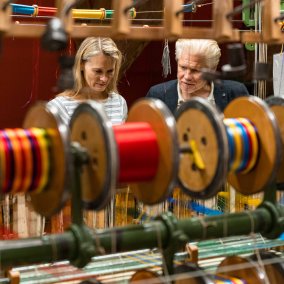
On a guided walk through Liestal, we take a look at the Hanro site: since the knitting mill and clothing factory was founded in 1884, numerous workers from near and far have found employment here. But how did they fare in their new place of residence and work? How were they received in Liestal - and how did they shape the town?
We contrast this with the ancient perspective: Migration for various reasons was also widespread in the Roman Empire. What parallels are there? What differences? And how did these population movements influence the development of Augusta Raurica?
The walk invites you to a dialog between antiquity and modern times - along the "migration lines" of Liestal.
Start: Hanro-Areal, Liestal. Main entrance
Organizer: Museum.BL, Cantonal Library Baselland, Augusta Raurica, State Archives Baselland
On registration: Basel History Days 2026
On a guided walk through Liestal, we take a look at the Hanro site: since the knitting mill and clothing factory was founded in 1884, numerous workers from near and far have found employment here. But how did they fare in their new place of residence and work? How were they received in Liestal - and how did they shape the town?
We contrast this with the ancient perspective: Migration for various reasons was also widespread in the Roman Empire. What parallels are there? What differences? And how did these population movements influence the development of Augusta Raurica?
The walk invites you to a dialog between antiquity and modern times - along the "migration lines" of Liestal.
Start: Hanro-Areal, Liestal. Main entrance
Organizer: Museum.BL, Cantonal Library Baselland, Augusta Raurica, State Archives Baselland
On registration: Basel History Days 2026
This text was translated by an AI.