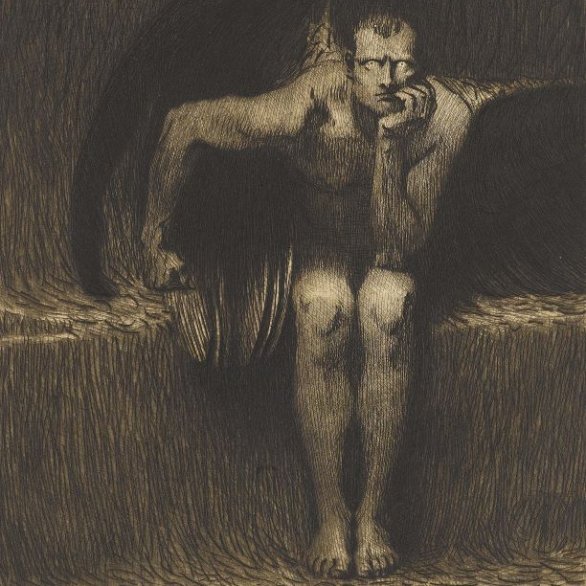
How can the invisible be depicted? Long before Surrealism introduced a new, overarching reality into art through its exploration of dreams and the subconscious, artists were already exploring the realms of nightmares, visions, the fantastic, and the spiritual. As a prologue to the major Surrealism exhibition at the Staatsgalerie, the Graphik-Kabinett exhibition “Nightmare and Vision: Between Shadow and Enlightenment” traces the origins of these visual worlds through some 40 works.
In prints and paintings from the 18th and 19th centuries—including highlights such as Francisco de Goya’s “The Sleep of Reason” and Max Klinger’s variation on Arnold Böcklin’s “Isle of the Dead”—a twilight realm of hallucinations, metamorphoses, and inner images emerges. The exhibition situates the works within a longer European visual tradition. Since the Renaissance, artists have engaged with demons, folk beliefs, alchemy, and mystical revelations. These ideas by no means disappeared with the Age of Enlightenment. Rather, they became counter-worlds to reason, in which fears, desires, and the hidden forces of the human psyche coalesced.
In prints and paintings from the 18th and 19th centuries—including highlights such as Francisco de Goya’s “The Sleep of Reason” and Max Klinger’s variation on Arnold Böcklin’s “Isle of the Dead”—a twilight realm of hallucinations, metamorphoses, and inner images emerges. The exhibition situates the works within a longer European visual tradition. Since the Renaissance, artists have engaged with demons, folk beliefs, alchemy, and mystical revelations. These ideas by no means disappeared with the Age of Enlightenment. Rather, they became counter-worlds to reason, in which fears, desires, and the hidden forces of the human psyche coalesced.