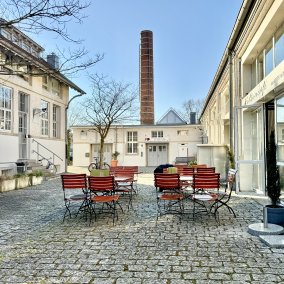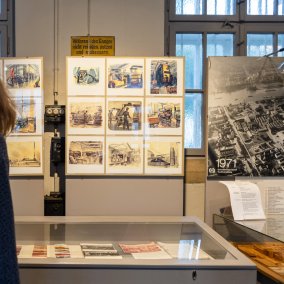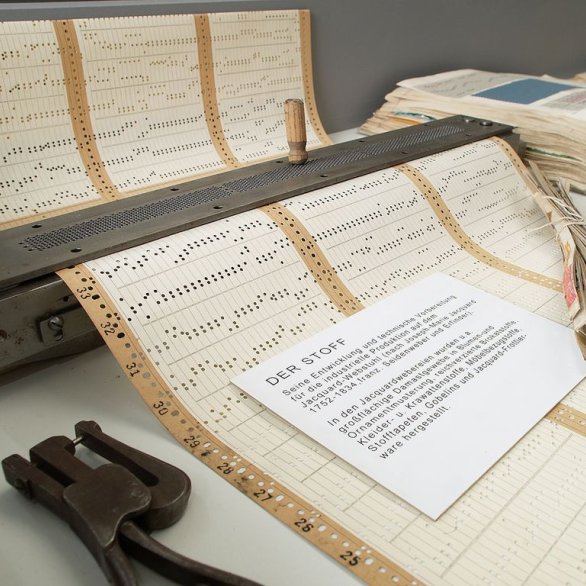
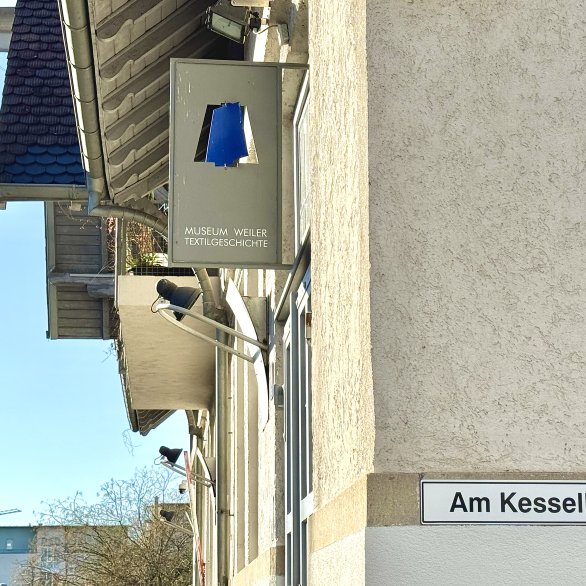
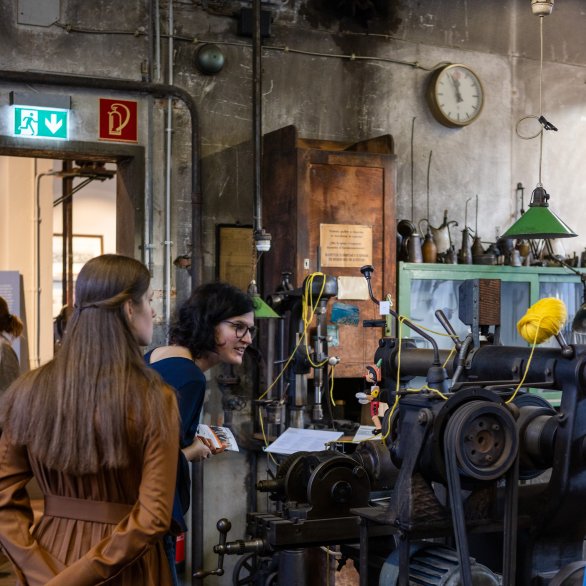
Numerous interesting objects, pictures and models tell the story of the textile industry in Weil am Rhein, which began in 1880 with the founding of the first dye works. The good location on the water, the proximity to Basel and a connection to the railroad network were favorable conditions for the further establishment of the Schetty dyeing and finishing works in 1898 and finally the Robert Schwarzenbach silk fabric weaving mill in 1923. For decades, the townscape of Friedlingen was characterized by the huge shed halls with their saw-tooth roofs and the chimneys of the boiler houses. In its heyday, the Schwarzenbach silk weaving mill employed up to 450 people, the Schetty dyeing mill up to 700 and the Schusterinsel dyeing and finishing mill as many as 1200. In 1982, the Schwarzenbach silk weaving mill was the last textile industry in Friedlingen to cease operations. The former carpenter's workshop and locksmith's shop of this company have been lovingly restored and are now home to the museum. Aerial photographs show visitors the extent of the once flourishing industry. Historic machines from the 1920s, tools, pattern books and numerous relics of the working world are reminders of the textile era in Weil-Frielingen. Furthermore, pay books, weaving shuttles, yarn spools, punch cards and pattern drawings are silent yet eloquent witnesses to this era. Visitors have free admission on today's Open Monument Day
This text was translated by an AI.