
The Natzweiler-Struthof concentration camp memorial, located in Natzwiller in the Vosges mountains, is now an important place of remembrance, mediation and reflection open to all citizens. The camp, which is considered a central place of national remembrance, offers a structured and educational trail that enables visitors to understand the history of the camp, focusing on the values of peace, freedom and commitment.
The camp was built in 1941 in the context of the annexation of Alsace by Nazi Germany and was initially used to exploit a nearby workplace before being integrated into the Nazi concentration camp. From 1943, as part of the total war, halls for the assembly of aircraft engines were installed in the street. After its discovery by the American army in November 1944, the site was quickly placed under protection to make it a permanent memorial.
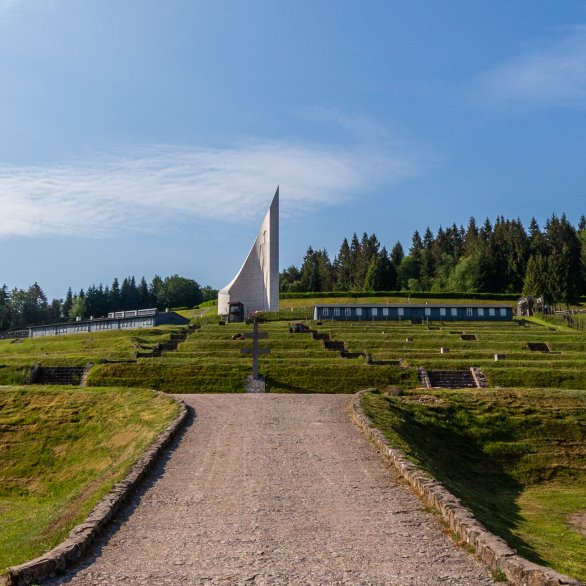
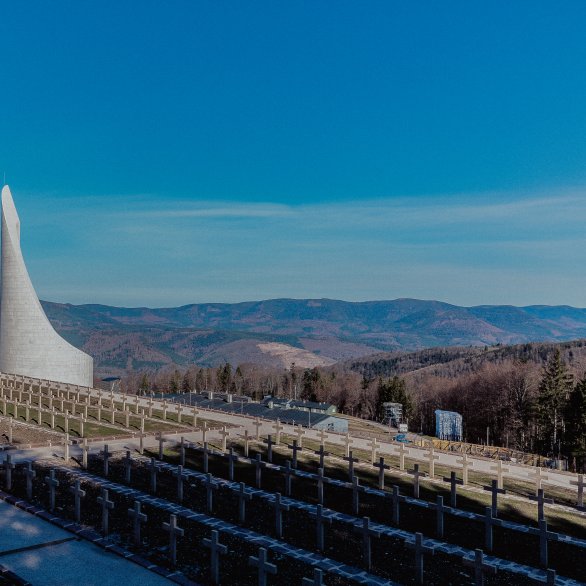
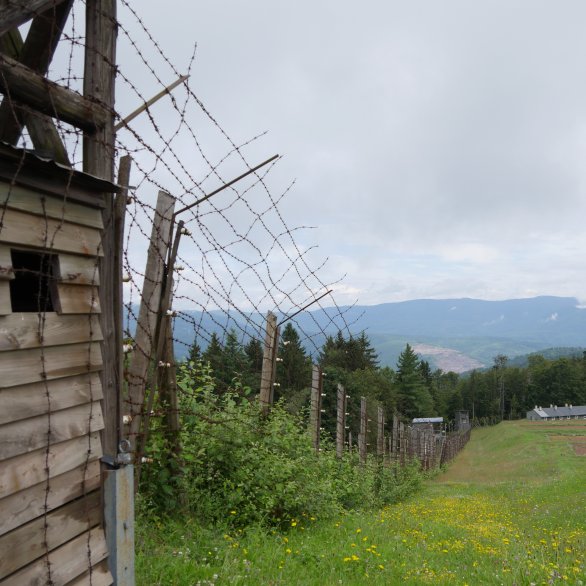
Today, visitors can tour the former camp with some of its barracks, its infrastructures and also its gas cylinder, which give a good insight into the organization of the site. In the immediate vicinity, the National Square and the memorial to the martyrs and heroes of the deportation, inaugurated in 1960, dominate the valley. This imposing monument, 40 m high and visible from afar, symbolizes remembrance and commemoration and honours the victims.
The trail begins at the Centre européen du résistant déporté, inaugurated in 2005. It offers a 2,000 m² permanent exhibition with films, photographs, memories and digital devices. The visit allows visitors to place the site in the European history of the Second World War, understand the mechanisms of dictatorships and shed light on the commitment to freedom.
Today, the Natzweiler-Struthof concentration camp memorial is a place of education, remembrance and communication, especially for the younger generations. Natzweiler-Struthof invites everyone to reflect on the past in order to better shape the future, in a remarkable natural setting that encourages respect, silence and reflection.
The camp was built in 1941 in the context of the annexation of Alsace by Nazi Germany and was initially used to exploit a nearby workplace before being integrated into the Nazi concentration camp. From 1943, as part of the total war, halls for the assembly of aircraft engines were installed in the street. After its discovery by the American army in November 1944, the site was quickly placed under protection to make it a permanent memorial.
Today, visitors can tour the former camp with some of its barracks, its infrastructures and also its gas cylinder, which give a good insight into the organization of the site. In the immediate vicinity, the National Square and the memorial to the martyrs and heroes of the deportation, inaugurated in 1960, dominate the valley. This imposing monument, 40 m high and visible from afar, symbolizes remembrance and commemoration and honours the victims.
The trail begins at the Centre européen du résistant déporté, inaugurated in 2005. It offers a 2,000 m² permanent exhibition with films, photographs, memories and digital devices. The visit allows visitors to place the site in the European history of the Second World War, understand the mechanisms of dictatorships and shed light on the commitment to freedom.
Today, the Natzweiler-Struthof concentration camp memorial is a place of education, remembrance and communication, especially for the younger generations. Natzweiler-Struthof invites everyone to reflect on the past in order to better shape the future, in a remarkable natural setting that encourages respect, silence and reflection.