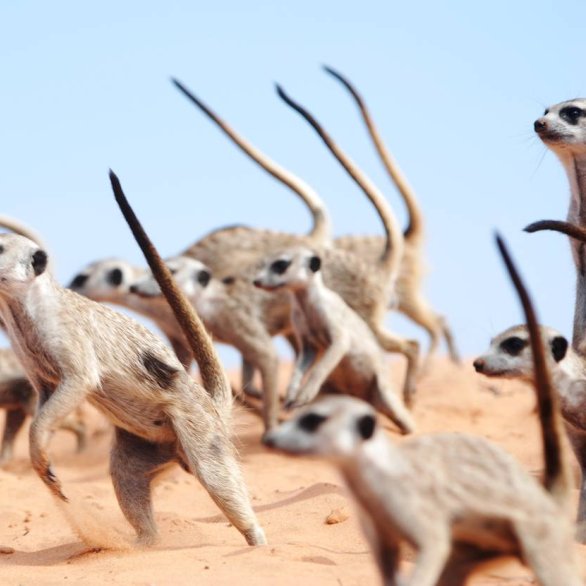
Traveling together as a group—whether among humans or animals—brings benefits for life, but requires coordinating the different interests of individual members. This also applies to the highly social meerkats, which constantly communicate with one another through calls to share information about their behavior, intentions, or dangers. They live in the arid regions of southern Africa, particularly in the Kalahari. Meerkats, which weigh less than one kilogram, are omnivores (feeding on insect larvae, scorpions, or small reptiles), but they are also prey themselves—for birds of prey, for example.
How do meerkats make decisions? How do they balance their own interests with those of the group? How do they communicate with one another? And have they already responded to global warming?
The lecture series organized by the Natural History Society of Basel (NGiB) showcases scientific research across all disciplines. Learn more about the passions of amateur naturalists and renowned experts.
The lecture series takes place once a month during the university semester.
How do meerkats make decisions? How do they balance their own interests with those of the group? How do they communicate with one another? And have they already responded to global warming?
The lecture series organized by the Natural History Society of Basel (NGiB) showcases scientific research across all disciplines. Learn more about the passions of amateur naturalists and renowned experts.
The lecture series takes place once a month during the university semester.
This text was translated by an AI.