Will a miracle material—lightweight, versatile, and inexpensive—turn into a curse we can’t shake? Plastic waste and microplastics are considered one of the major new environmental problems. These issues concern us all and will become an even greater concern in the future. The longer plastic remains in the environment, the smaller and more inconspicuous the particles produced as it breaks down become. This increases the risk that they will be ingested by organisms.
But what do we really know about the prevalence of microplastics in our environment and our waterways—and about their effects on plants and animals?
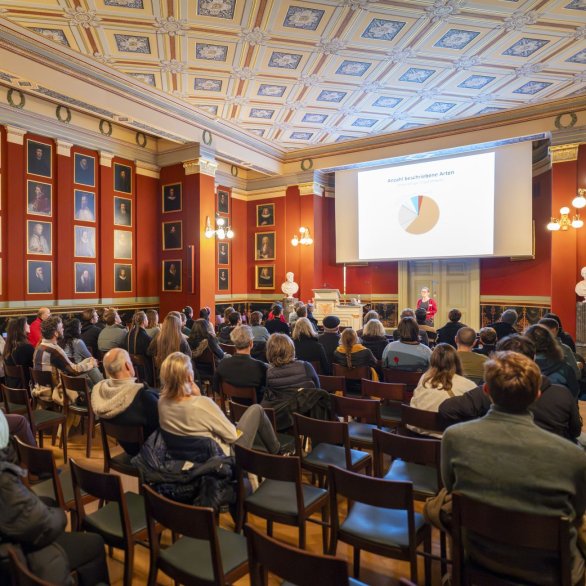
Drawing on her years of research on microplastics in the Rhine and other ecosystems, the speaker will explore these questions. She paints a clearer picture of the facts—and the unanswered questions.
The lecture series of the Natural History Society of Basel (NGiB) presents scientific research across all disciplines. Learn more about the passions of amateur naturalists and renowned experts.
But what do we really know about the prevalence of microplastics in our environment and our waterways—and about their effects on plants and animals?
Drawing on her years of research on microplastics in the Rhine and other ecosystems, the speaker will explore these questions. She paints a clearer picture of the facts—and the unanswered questions.
The lecture series of the Natural History Society of Basel (NGiB) presents scientific research across all disciplines. Learn more about the passions of amateur naturalists and renowned experts.
This text was translated by an AI.