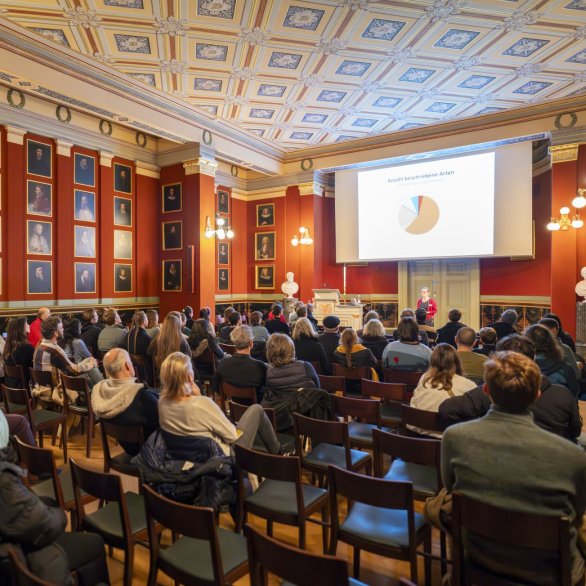
Thanks to their intermittently moist lifestyle, lichens are typical inhabitants of extreme habitats with frequently fluctuating water and temperature conditions. In the nival zone (e.g., high mountains), they are among the most important primary producers and, over the centuries, have come to cover the rocky surfaces of the highest Alpine peaks. But even at lower elevations, many surfaces dry out so severely that taller plants cannot survive there—for example, on walls, tree bark, deadwood, and shallow soils. Lichens find habitats in all these places and, thanks to their symbiotic lifestyle—involving a fungal partner and an algal or cyanobacterial partner—they form a significant part of biodiversity as primary producers and can also play an important role in food webs. This lecture will present interesting aspects of the ecology and conservation biology of lichens.
This text was translated by an AI.