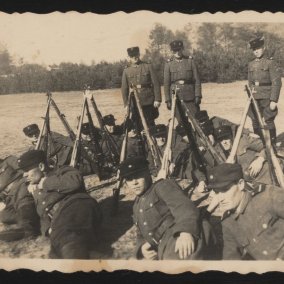
Avec son installation « Green Fence » (en français : « Clôture verte »), qui s’étend sur deux étages, Georg Lutz explore la question de la représentabilité du génocide dont ont été victimes principalement des Juifs. Son étude prend pour point de départ l’ancien camp d’extermination nazi de Sobibor et une photographie prise par l’un des auteurs des crimes, issue de l’album Niemann découvert en 2019.
C’est sans doute à l’arrière-plan de cette photographie que l’artiste a découvert pour la première fois le passage menant aux lieux d’extermination, camouflé par des branches de sapin. En utilisant les matériaux de construction connus de cette clôture historique – branches de sapin, piquets en bois, fil barbelé et sable –, Georg Lutz sensibilise le public à la domination absolue de l’homme sur la nature. Contrairement à sa fonction initiale de camouflage, l’installation rend visibles les mécanismes des crimes nazis. Cet effet s’intensifie avec le temps grâce au caractère éphémère et accessible de l’œuvre : à mesure que les branches se décomposent délibérément, le paravent se dissout lentement, révélant ainsi, tout au long de l’exposition, la véritable nature de la clôture en fil barbelé.
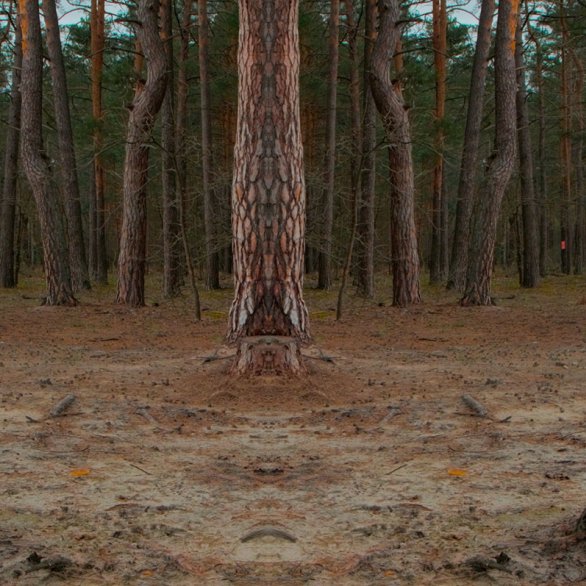
Ce discours sur la représentabilité est approfondi à l’étage inférieur par une œuvre vidéo qui montre le site actuel de l’ancien camp sous…
“Green Fence” is an installation that spans over two floors. The artist, Georg Lutz, explores the question of how the mass murder of predominantly Jewish people can be represented. The starting point for his investigation is the former extermination camp at Sobibor and a photograph taken by a perpetrator from the Niemann album discovered in 2019.
It was in the background of this photograph that the artist first discovered the path to the extermination sites, camouflaged with fir branches. Using the familiar building materials of this historic fence –pine branches, wooden posts, barbed wire and sand – Georg Lutz focuses attention on the absolute domination of both humanity and nature. In contrast to its original function of camouflage, the installation makes the mechanisms of Nazi crimes visible. This effect intensifies over time due to the ephemeral, walk-through nature of the work: as the branches deliberately decay, the screen slowly dissolves, so that over the duration of the exhibition the true nature of the barbed-wire fence is revealed. The discourse on representability is further explored on the lower floor through a video work that explores the site of the former camp
It was in the background of this photograph that the artist first discovered the path to the extermination sites, camouflaged with fir branches. Using the familiar building materials of this historic fence –pine branches, wooden posts, barbed wire and sand – Georg Lutz focuses attention on the absolute domination of both humanity and nature. In contrast to its original function of camouflage, the installation makes the mechanisms of Nazi crimes visible. This effect intensifies over time due to the ephemeral, walk-through nature of the work: as the branches deliberately decay, the screen slowly dissolves, so that over the duration of the exhibition the true nature of the barbed-wire fence is revealed. The discourse on representability is further explored on the lower floor through a video work that explores the site of the former camp